

Five Things To Know About Ghana As Country Marks 69th Independence Anniversary
Regardless of the economic reality of Ghana, citizens of the country will troop out to every nook and cranny of the West African nation to celebrate 69 uninterrupted years of unfettered freedom from the shackles of colonialism. That’s one year shy of seven decades since Ghana threw off the yoke of oppression, enslavement and allied maladies that colonialism connotes.
Though only few adults that witnessed the epochal celebration of independence from the grip of the British rule and eventual declaration of the black nation as a national sovereignty are still alive, generations unborn on March 6 1957 have cause to roll out the drums. If not for anything else, at least to in praise of the efforts of their past heroes and founding fathers.Therefore, from balconies to boulevards, from ornate offices to dingy shanties, every inhabitable space in Ghana will be emblazoned with festive buntings to mark the historic event.
The people’s template brings you 5 things, about Ghana worthy of mention.
First sub-Saharan African Country To Achieve Self-rule:
Africa, which is predominantly a land of black people, is the second-largest continent in the world in terms of both geographic size and population. Though there are people of diverse spectrum of skin colours ranging from olive and fair tones to light brown and dark brown, in the Northern part of the continent, when Africa is mentioned what readily comes to mind is “blackness” and not hotpotch of colours.
Africa had had its years of oppression by foreign powers. In a manner of speaking, European political powers drew lots to decide the fate of African countries to keep their colonialist hold on the continent. In this “scramble for Africa” which happened in the late 19th and early 20th centuries, Ghana, like her neighbour, Nigeria became a protectorate of the United Kingdom. However, through the sheer determination of now known in history as nationalists, Ghana became the first Africa sub-Saharan Africa nation to secure her independence from British rule. Ghana achieved this feat on March 6 1957. This move inspired her more populous neighbour, Nigeria, to push for her own emancipation too, three years after.
2 Kwame Nkrumah, Others Fought For Ghana’s Independence
Ghana’s Independence was led by a bunch of nationalists who could no longer stand the oppression, intimidation and subjugation of natives’ will by foreigners. Prominent among these nationalists was a Pan-Africanist and feisty revolutionary in his late forties known as Kwame Nkrumah. After a successful struggle for independence, Nkrumah became the first Prime Minister and later the first President of the fledgling independent nation. He was ousted from office by a group of power-driven, hot-headed young soldiers via a military coup in 1966 while in Hanoi and Beijing
3 Formerly Known As Gold Coast
Until its freedom from the clutches of colonialism, the country currently known as Ghana used to be called Gold Coast. It was so christened for its rich and abundant deposit of Gold along the country’s coastlines. However, to rid the country of its vestiges of colonialism, it was rechristened Ghana following independence. Ghana is not alone in this rechristening spree following independence from colonialism. Burkina Faso, Zimbabwe, Dr Congo among others changed their names from Republic of Upper Volta, Southern Rhodesia and Zaire respectively.
4 Ghana: A “Babelic” Nation
The vast and fertile land of Ghana could have been another Tower of Babel with its over 250 dialects spoken across its nook and cranny but for its adoption of English Language as the official language. The adoption of English has prevented these Babel of tongues from standing in the way of fruitful conversations over the years.
5. Ghana’s National Flag: A Cloth Of Many Beautiful Colours
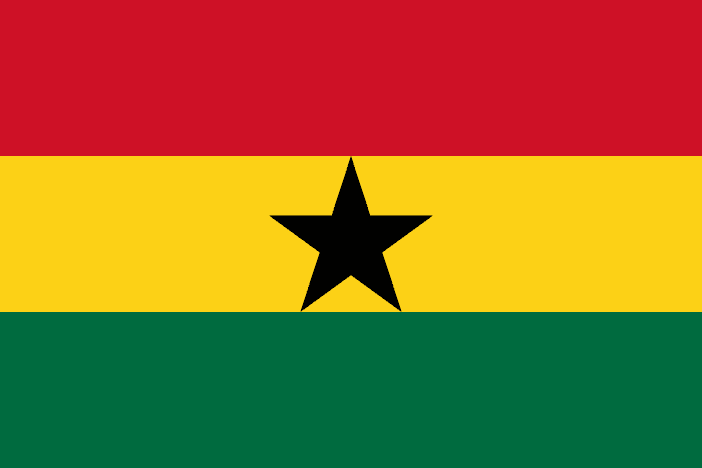
Ghanians flaunt their national flag the same way they wear their native attire. The national flag with its shining black star sandwiched between a splash of beautiful colour is a sight to behold. The colours are a deft combination of red, gold and green. The red represents the raw passion that drove the nationalists to pay the ultimate sacrifice and shed their blood in the fight for independence, the gold represents the country’s mineral wealth, and the green represents its rich forests. The black star symbolizes the fruit reaped after the fight for independence which is Africa freedom.