


Karma, Cosmic Balance and the Mirror Before Us: A Rejoinder to Babafemi Ojudu
By. Abidemi Olanrewaju
I read Senator Babafemi Ojudu’s recent article on karma, political betrayal, and cosmic balance with keen interest. It was elegant in prose, dramatic in moral framing, and rich in philosophical posturing. Yet, after reading it from beginning to end, one troubling thought refused to leave me: perhaps no one fits the moral lesson of that article more perfectly than the author himself.
This is not written to hold brief for Dr. Kayode Fayemi, whom Ojudu chose as the principal object of his reflections. Nor is it written to settle scores. Rather, it is to ask a simple question: before pointing fingers at others over power, betrayal, exclusion, and political consequences, has Senator Ojudu ever paused to look into the mirror?
For if there is one striking feature of his article, it is that the very “cosmic balance” he preached seems to describe his own political journey far more than that of Fayemi.
Senator Ojudu spoke emotionally about loyalty, abandonment, exclusion, and political humiliation. Fair enough. Politics can indeed be brutal. But history is a stubborn witness. It remembers not only what was done to us, but what we ourselves did to others when seasons changed.
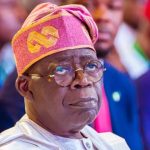
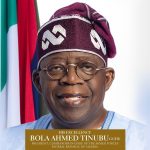
Let us begin with Bola Ahmed Tinubu.
It is no secret within progressive politics that Tinubu was not merely another politician to many in that family. He was benefactor, political builder, strategic enabler, and, for many, the bridge between obscurity and relevance. Senator Ojudu and his longtime associate, Mr. Bayo Onanuga, were among those who benefited immensely from Tinubu’s political goodwill, support network, and influence within the progressive movement.
Yet, when Tinubu was politically isolated after the 2015 victory of the APC and reportedly left in the cold within sections of government and party power circles, where exactly was Ojudu?
Was he not part of the very government ecosystem and party tendency that watched Tinubu become increasingly sidelined under the Buhari administration?
More importantly, what role did he personally play when political calculations shifted toward Vice President Professor Yemi Osinbajo?
History again supplies inconvenient answers.
Ojudu did not merely support Osinbajo’s presidential aspiration. That, in itself, would have been politically understandable. Every citizen has a democratic right to support a preferred candidate. The issue was never support. The issue was excess.
Professor Osinbajo was not just another politician. He was Tinubu’s political protégé, nominee, and mentee, personally recommended by Tinubu to serve as Buhari’s running mate in 2015 at a time many within the party resisted certain political permutations. The least expected within the progressive fold was restraint, balance, and political sensitivity.
Instead, Ojudu went overboard.
He became one of the loudest public voices projecting Osinbajo’s succession plan while Tinubu, his former benefactor and party leader, was openly preparing for the same presidential contest. By his own public comments, Ojudu made no pretence about where he stood.
At one point, he publicly declared that if Bola Tinubu emerged as Buhari’s preferred successor, he would rather “go back to the farm” than support him, insisting, “If I don’t believe in you, I will not work for or with you.”
These were not private conversations whispered behind closed doors. These were public statements made in the heat of political competition.
Even more ironic was that before tensions escalated, Ojudu had publicly insisted there was no crack between Tinubu and Osinbajo and warned against divisive politics. Yet events soon showed that he had unmistakably taken sides in a contest involving two men whose political relationship predated many of the actors around them.
One therefore wonders: by the moral standards of “karma” advanced in his article, what exactly should history make of this conduct?
Can a man publicly work against the political ambition of someone widely regarded as his benefactor and later speak authoritatively about loyalty, exclusion, and betrayal without first confronting his own contradictions?
Can one lament political coldness while forgetting moments when he himself contributed to another man being politically isolated?
Can someone preach cosmic justice while pretending not to see the role he played in political hostilities within the same progressive family?
Interestingly, Professor Osinbajo himself, despite eventually contesting against Tinubu, maintained remarkable restraint. To this day, it is difficult to find public statements in which Osinbajo personally attacked Tinubu. Even after losing the APC presidential primary, he carried himself with measured civility.
The same restraint cannot always be said of some around him.
That is why Ojudu’s article feels less like wisdom and more like unintended autobiography.
For if karma truly exists in politics, then perhaps Senator Ojudu should recognise that he personifies the very lesson he seeks to teach: that politics has a long memory, that seasons change, and that the treatment we reserve for others often returns to us in unfamiliar forms.
Indeed, one line from his article deserves to be returned respectfully to sender: “The universe has a long memory.”
Yes, it does.
And perhaps that memory remembers more than Senator Ojudu would like us to forget.