



Obi of Onitsha’s Birthday Celebration in Lagos: A Missed Opportunity for Culture, Heritage, and Community
By Kay Lord
One of the unfortunate consequences of the political polarization that has engulfed Nigeria is that it has become increasingly difficult to make contributions to important public issues without some people immediately filtering every opinion through the prism of ethnicity, politics, or tribal sentiment. Today, even the most well-intentioned observations are often met with accusations of bias rather than engagement with the substance of the argument.
Yet, we cannot allow the fear of being misunderstood to prevent us from speaking on matters that affect our cultural institutions and heritage. If there is one thing that should transcend politics, it is the preservation and promotion of our traditional institutions, which remain among the strongest symbols of our collective identity.
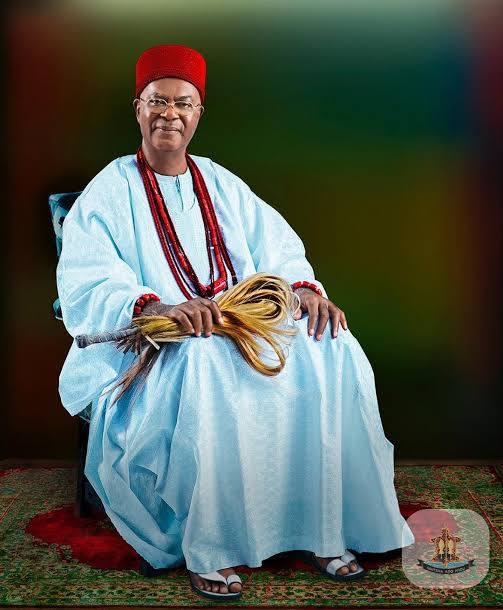
It is from this perspective that I respectfully disagree with the decision of the Obi of Onitsha to celebrate his birthday in Lagos rather than in Onitsha.
This role has nothing to do with the person sitting on the throne or the ethnic group in question. If the Ooni of Ife decided to celebrate his birthday outside of Ile-Ife, I would still voice the same concern. Similarly, if the Alaafin of Oyo chose to host his birthday bash in Lagos or Abuja, I would make the same point. It’s hard to picture the Sultan of Sokoto stepping away from Sokoto for such an important celebration, or the Emir of Kano moving such a significant event to another city.
Traditional rulers are more than just figureheads. They are the keepers of culture, the protectors of history, and the links that connect generations. Their roles hold weight not just because of who they are, but because of the communities and lands they stand for. The throne and the kingdom are two sides of the same coin, and the honor of the monarch is deeply tied to the honour of their realm.
That is precisely why occasions such as birthdays, coronation anniversaries, cultural festivals, and other major events should, as much as possible, be anchored within the traditional ruler’s domain. Such events provide unique opportunities to draw attention to the community, attract visitors, stimulate local economic activity, and showcase the richness of local culture.
Imagine the value that a grand birthday celebration of the Obi could bring to Onitsha itself. Sons and daughters of the kingdom from across Nigeria and the diaspora would return home. Government officials, captains of industry, diplomats, and foreign guests would visit the city.
Hotels would be filled. Local businesses would benefit. Cultural displays, traditional performances, historical exhibitions, and community projects could all be incorporated into the celebration.
Most importantly, the event would remind younger generations that the throne is not an abstract institution existing in isolation. It is rooted in a people, a history, and a geographical community.
Across the world, successful traditional and cultural institutions understand the importance of place. The power of monarchy and tradition is often reinforced by the symbolic connection between the ruler and the land. Visitors travel to Windsor because that is where the British monarchy is historically rooted. Tourists visit ancient kingdoms, palaces, and cultural sites because those locations embody the history they seek to experience. The location itself becomes part of the story.
When significant royal events are routinely moved away from the traditional domain, an opportunity is lost. The community that should be the primary beneficiary of the event becomes a spectator rather than a participant. The kingdom loses a chance to project itself to the wider world.
Furthermore, traditional institutions today face increasing pressure from modernization, urban migration, and globalization. Many young people are already disconnected from their history and customs. At a time when traditional rulers should be strengthening the visibility and relevance of their domains, every major occasion should be leveraged to reinforce that connection rather than weaken it.
This is not an argument against Lagos. Lagos is Nigeria’s commercial capital and home to millions of Nigerians from every ethnic background. Nor is it an argument against celebrating with friends, associates, or admirers who reside there. Smaller receptions and appreciation events can certainly take place anywhere.
However, the principal celebration of a monarch’s birthday should, in my view, take place in the kingdom over which he reigns. The throne belongs there. The palace is there. The people are there. The history is there.
Traditional rulers are among the last remaining institutions capable of preserving our cultural identity in a rapidly changing world. Every opportunity to strengthen that identity should be embraced. Birthdays, anniversaries, and major royal celebrations are not merely personal milestones; they are cultural events with symbolic significance.
For that reason, I believe the celebration of the Obi of Onitsha’s birthday in Lagos was a missed opportunity—an opportunity to bring attention to Onitsha, to showcase its heritage, to promote its culture, and to remind the world that a great throne is at its strongest when it remains firmly connected to the people and the land from which it derives its authority.